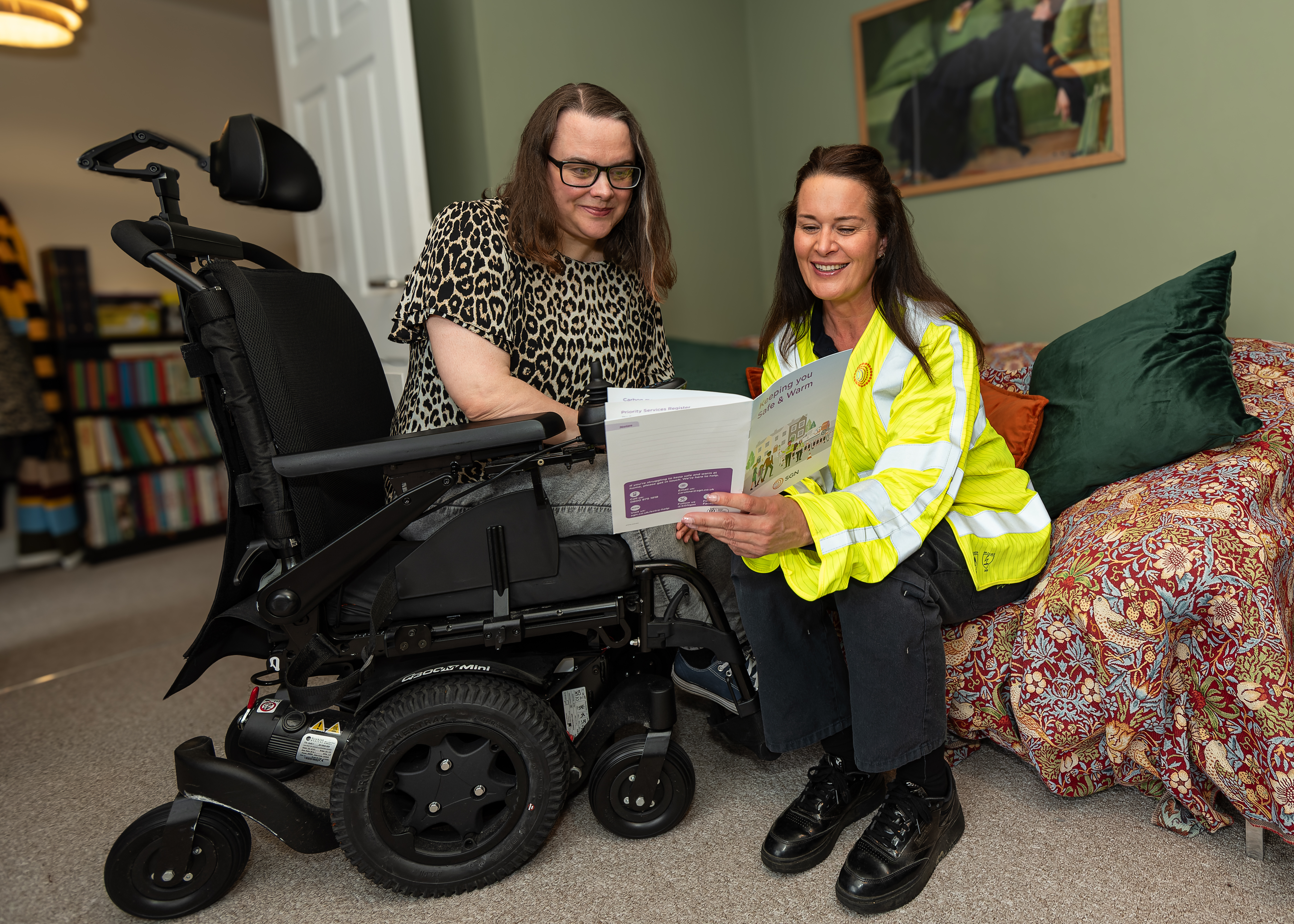


Our vulnerability partner toolkit provides tools to help promote our collaboration, with key messages and assets for you to use with your clients.
Media library image
This page is updated regularly, so please check you're using the most up to date facts and figures before publishing your content.
Feel free to copy and paste any elements of this information on your website, social media posts, emails or newsletters.
For further information and advice on using this content, contact Communications Officer Bradley Barlow or your SGN partnership contact.
SGN people, facts and figures
The key SGN people you'll be working with and need to quote in your resources, plus other facts and figures that may be of use.
- Kerry Potter, Head of Social Impact and Vulnerability
- Dan Edwards, Social Impact Programme Lead
- David George, Social Impact Co-ordinator
- Daisy Brown, Social Impact Co-ordinator
- Graeme McLarty, Community Partnership Manager
- Janet Duggan, Community Partnership Manager
- Margaret Hamilton, Community Partnership Manager
- Shelley Smith, Customer Experience Performance Officer
- We transport natural and green gas to over six million customers, including over 189,000 businesses, across Scotland and southern England. Our pipes deliver gas safely, reliably and efficiently to each of these customers.
- We’re a vital part of Britain’s critical national infrastructure, providing heat and energy to families, schools, hospitals, power stations and essential businesses.
- We serve our communities by keeping everyone safe and warm. Over 4,800 colleagues keep gas flowing safely and reliably all day, every day.
- We’re trusted to walk through the doors of around 300,000 homes each year as we respond to gas emergencies and upgrade our network – often meeting some of the nation’s most vulnerable households. Our teams proudly go above and beyond for our customers, always providing outstanding service.
Please note: we’re no longer known as Scotland Gas Networks or Southern Gas Networks and should always be referred to as SGN.
- Customers are at the heart of what we do. SGN has a bold ambition to help 650,000 vulnerable customers use energy safely, efficiently and affordably during our GD3 price control (between 2026 and 2031).
- Our five-year vulnerability support strategy guides our activity to ensure we’re delivering genuine and valuable impact to those most in need of help to stay safe and warm at home.
- We’ve developed an extensive partnership network to help us deliver a comprehensive range of programmes to support vulnerable households up and down the country.
- We’re extremely proud of the programmes we’ve created and grateful to the expert partners who support us in going above and beyond for vulnerable households.
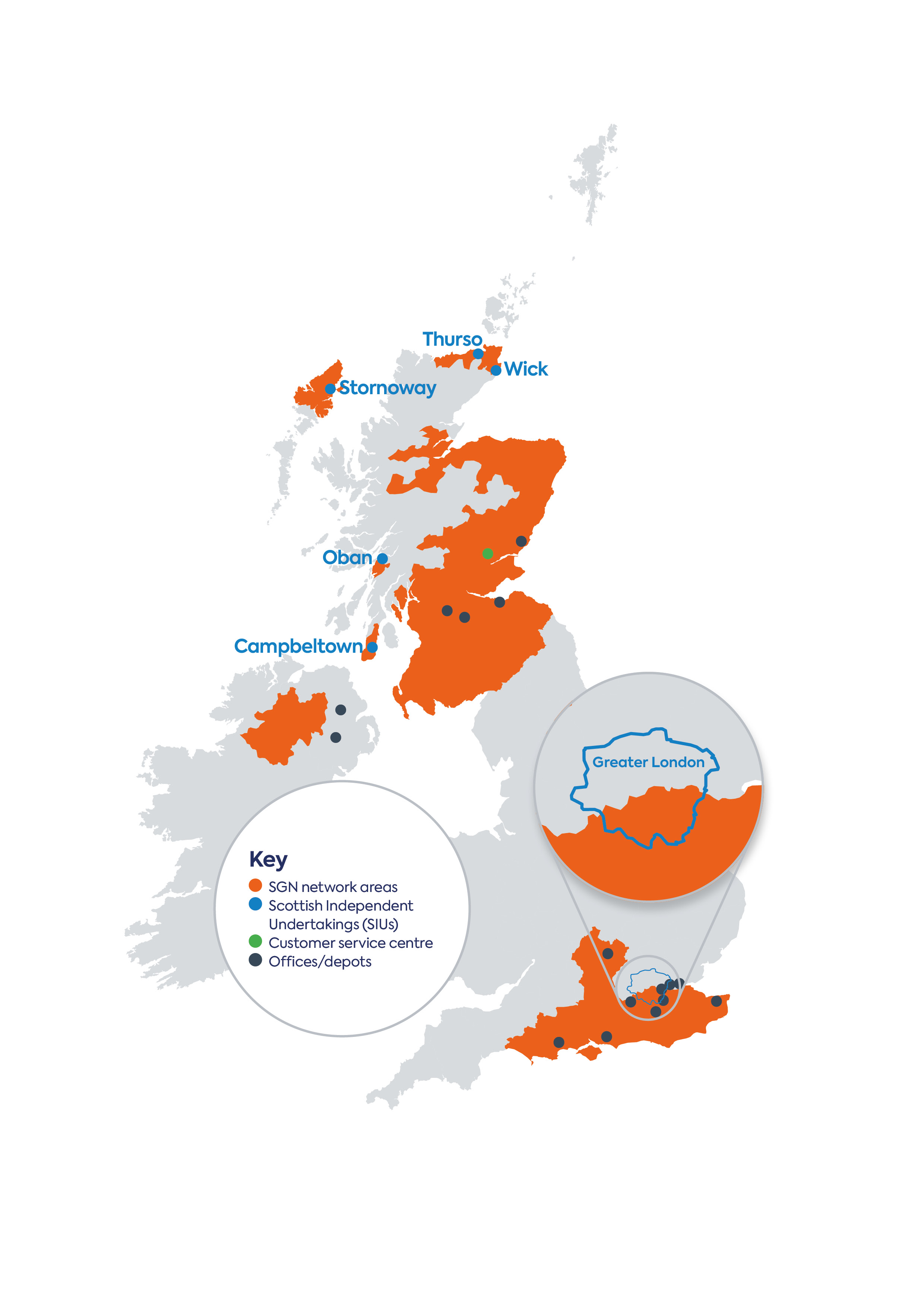
- Our communities are as diverse as the regions we cover, from the rural Scottish Highlands to coastal Kent and the inner cities of Edinburgh, Glasgow and south London.
- We recognise the responsibility of being invited into people’s homes. Our unique role allows us to not only keep customers safe and warm, but also connect households with wider support to use energy safely, efficiently and affordably.
- Together, we’re keeping our communities safe and warm by providing tailored and targeted support for those who need it most.
- SGN’s partnerships deliver essential support, not just addressing the immediate needs of households in fuel poverty crisis but also addressing the causes of fuel poverty to build long-term financial resilience. We look to partner with organisations that can provide crisis support, energy efficiency advice and energy bill advocacy to ensure that customers in fuel poverty get the support they need to manage their immediate needs.
- SGN partner with trusted energy advice partners who support customers to access energy efficiency schemes, so households who are struggling to afford to heat their homes get the help they need to improve the energy efficiency of their home in the longer term.
- Our Safe & Warm partnership network includes more than 140 programme partners, ranging from national organisations and regional charities to hyperlocal community groups. Together, our partners are united by a shared purpose to remove the barriers vulnerable households face in staying safe, warm and well at home.
- At an organisational level, we invest in partner organisations so they can help each other do more by sharing expertise, establishing referral pathways and developing training that extends beyond the VCMA. We also invest in the individualsdelivering support. We ask partners what training they could offer others, and what skills and resources their organisations need.
- Through regular in-person and hybrid events, we’ve created a community for advisors and programme leads to learn from one another, share the burden of care and feel recognised for the vital role they play.
- Find out more about our Safe & Warm partnership network here.
Statements
This is standard text you can use as part of your resources.
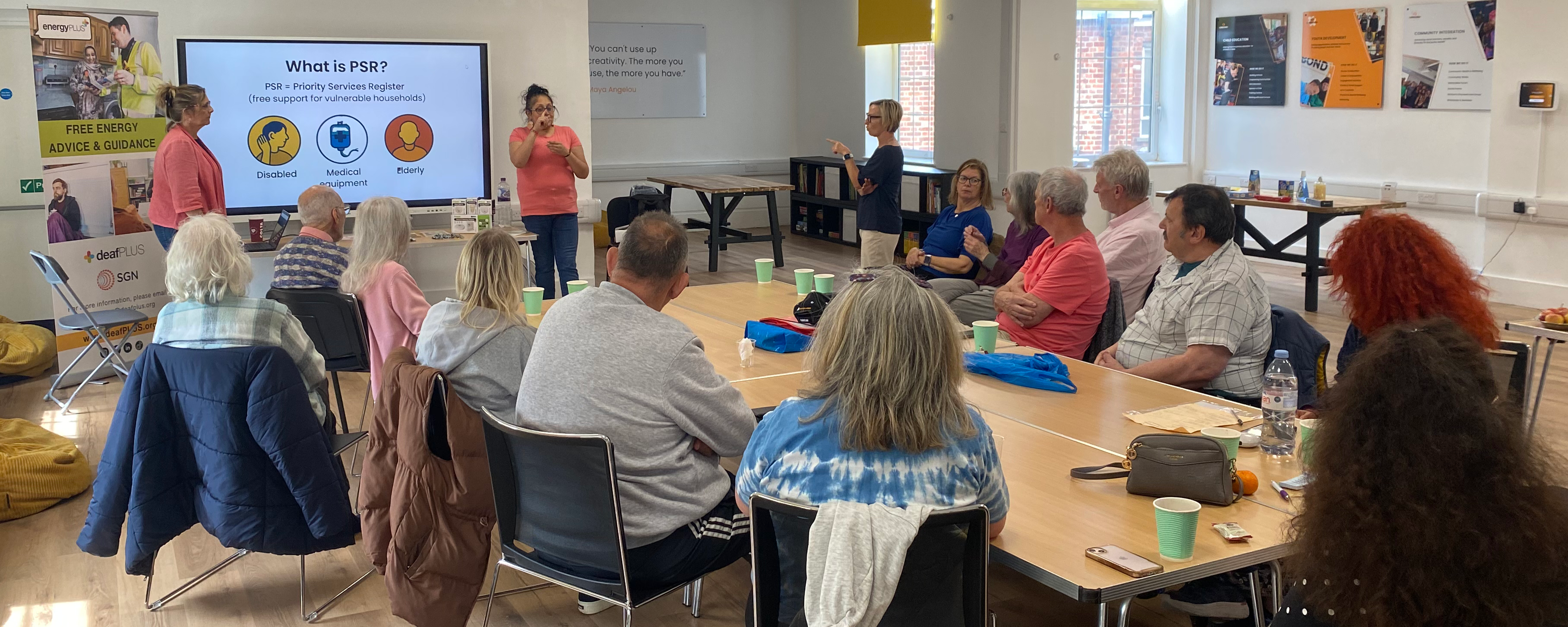
- The Priority Services Register (PSR) helps utility companies identify customers who need priority support in a gas emergency, power cut or water supply interruption.
- By registering for this free service, you will receive extra help if you’re without your gas supply either in an emergency or because of planned work. Energy companies and networks can provide electric heating and cooking appliances or even alternative accommodation where required to keep you safe and warm while you’re without gas.
- The PSR also lets other energy companies like SGN, including your utility suppliers, tailor their day-to-day services to your individual needs to make sure they're helping you stay safe, warm and well-informed all year round. This includes offering you information in other formats like large print or Braille, nominating someone else to deal with your energy bills on your behalf, and providing advance notice of any planned loss of supply or power cuts or water supply interruptions.
Who can register for the PSR?
You, or your loved ones, could be eligible to join the Priority Services Register if you’re:
- of pensionable age
- have children under five or are pregnant
- have long-term physical or mental health conditions
- have a disability
- have additional language or communication needs
This is just a selection of people who are eligible for the PSR - a full list can be found here.
How to register
The PSR is completely free and confidential and it means you’ll always get the help you need, particularly in an emergency. If you’re not registered on the PSR, we can help you join.
- Visit thepsr.co.uk, or in Scotland, visit psrscotland.com
- Call our PSR line on 0800 912 1700
- Send an email to careline@sgn.co.uk
Videos
SGN's information video about the PSR is available in six languages and can be embedded on your website:
- English with subtitles (watch here on YouTube)
- British Sign Language with subtitles (watch here on YouTube)
- Arabic with subtitles (watch here on YouTube)
- Farsi with subtitles (watch here on YouTube)
- Polish with subtitles (watch here on YouTube)
- Spanish with subtitles (watch here on YouTube)
If you require the original video file, please contact your partner at SGN to request a copy.
You can download our leaflet on carbon monoxide and gas safety in a range of languages here or in our 'leaflets, publications and videos' section below.
What is carbon monoxide (CO)?
- CO is a highly poisonous gas that is produced by the incomplete burning of fossil fuels (including gas, oil, wood, petrol and coal).
- You can’t see it, smell it, hear it or taste it – that’s why it’s known as the ‘silent killer’.
- It’s not just appliances in the home that can produce carbon monoxide. Other risk areas include:
- Camping sites
- Boats
- Using BBQs in an enclosed area
- Portable heaters
- Holiday accommodation
- Garages
- Wood pellet storage areas
- All SGN emergency staff wear personal atmosphere monitors (PAMs) which can provide an early warning of potential danger.
Six steps to CO safety
1. Check the flame
Is it burning lazy and orange? It should be crisp and blue. Other signs to check for:
- Are there black marks on or around the appliance?
- Does the pilot light frequently blow out or is there too much condensation?
2. Check ventilation
Is the flue from the appliance or your chimney blocked? Is there enough ventilation to allow your gas appliances to burn correctly – if they don’t have a sufficient air supply, they could produce carbon monoxide.
3. Check appliances
Make sure all your gas appliances are checked every year. Always use a Gas Safe™ registered engineer to fit, fix and check your appliances.
4. Get yourself a CO alarm
As well as getting your appliances fitted and checked by a Gas Safe™ registered engineer, you should buy and fit a CO alarm that will alert you and complies with BS EN 50291. You can buy carbon monoxide alarms in DIY stores, supermarkets and online. Remember, a smoke alarm is not a carbon monoxide alarm.
5. Check for symptoms
The following are all symptoms of CO poisoning:
- Headaches
- Nausea
- Dizziness
- Breathlessness
- Collapsing
- Loss of consciousness
If these symptoms occur when you’re at home but disappear when you are away from home, go straight to the hospital and get checked for possible CO poisoning.
6. Check your rights and responsibilities
If you are a tenant, by law, your landlord must check your appliances every year. Ask for a copy of the annual gas safety record. Check if your landlord has fitted a CO alarm that will alert you. If you are a landlord, it’s your responsibility to make sure your tenants are safe. You must make sure that gas pipework, flues and appliances are in good condition and checked every year by a Gas Safe™ registered engineer.
- Households in fuel poverty are at increased risk of using unsafe appliances or fuels to heat their homes, as well as rationing their energy use which can lead to cold damp homes. These measures all negatively impact household health, safety and wellbeing.
- According to the Department for Energy Security and Net Zero, the number of households who spend more than 10% of their income (after housing costs) on energy fell in 2025 to 7.63 million. This is 30.4% of households, down from 34.4% or 8.55 million in 2024. (source)
- In Scotland, one in three households are living in fuel poverty.
- In southern England, one in ten households are living in fuel poverty.
What should I do if I smell gas or suspect a leak?
If you smell gas, call the National Gas Emergency Service immediately on 0800 111 999* or via textphone (minicom) on 0800 371 787. If you're a British Sign Language (BSL) user, you can use Convo to contact the National Gas Emergency Service free of charge.
(*Calls are recorded)
What should I do if I'm worried about carbon monoxide in my property?
If you suspect there are high levels of carbon monoxide in your property, follow these steps:
- Open all doors and windows
- Move everyone into the fresh air
- Call the Gas Emergency Service on 0800 111 999 or via textphone (minicom) on 0800 371 787. If you're a British Sign Language (BSL) user, you can use Convo to contact the National Gas Emergency Service free of charge.
If someone has collapsed or is displaying severe symptoms, seek medical help by calling 999 or 112.
I've hit a gas pipe, what do I do?
If you or your builders have hit a gas pipe, call the National Gas Emergency Service 24 hours a day on 0800 111 999. Always know what's below before you start digging.
What happens when I call the National Gas Emergency line?
When you call the National Gas Emergency Service, you'll be put through to an operator who'll log your call. The operator will ask you for details about the gas leak, so be prepared with the following information:
- The address of the gas emergency
- How many people are at the property or within the area
- Where the smell is strongest
- How long the smell has been there
- Whether any neighbours are affected
- Your name and phone number
- Any special circumstances or access information
How long will I have to wait for an emergency gas engineer to arrive?
- If you've been able to turn off the gas supply using the emergency control valve on your meter, we'll be with you within two hours.
- If you're not able to turn off the gas supply at the emergency control valve, our emergency engineer will be with you within one hour.
The following information has been taken from our Help with your energy bills page.
With living costs rising rapidly, many people are finding their income isn’t stretching as far as it used to.
If you’re worried about paying your energy bills or other household bills, there’s organisations that can help.
What to do if you’re struggling to pay your energy bills
If you’re struggling to afford your energy bills, the first thing to do is to contact your gas and electricity suppliers.
Your supplier will discuss different ways for you to pay, such as payment plans or paying directly from your benefits.
If you’re on a prepayment meter and can’t afford to top it up, your supplier might be able to add temporary credit if you’ve run out of gas or electricity. It’s important to contact them and explain your situation, as temporary credit isn’t always applied automatically.
There’s more information about what to do if you’re struggling to pay your energy bills or can’t afford to top up your prepayment meter on the Citizens Advice website.
Grants and benefits to help you pay your energy bills
Some suppliers offer charitable grants for customers in debt to pay off their energy bills. You can also use the Turn2Us grant search tool to find other charitable organisations offering grants to households in need.
If you receive any type of benefit, you could also be eligible for extra benefits to help with your energy costs, such as the Warm Home Discount Scheme or Winter Fuel Payment.
Citizens Advice has lot of helpful information about grants and benefits to help pay your energy bills.
Where to go for help if you’re struggling with other household bills
As well as the Warm Home Discount Scheme or Winter Fuel Payment, there’s other benefits that can help with your household costs and boost your income.
We work with partners who can check if you’re eligible for any benefits or grants, and offer free, tailored support if you’re struggling during the cost-of-living crisis.
Our partners include:
- Age UK (England only)
- Age Scotland (Scotland only)
- Citizens Advice (for customers in England)
- Citizens Advice Scotland
- Mental Health UK
- National Energy Action (for customers in England)
- Wise Group (for customers in Scotland)
- Scope
You can contact any of our partners directly for support. Alternatively, you can call our Careline team on 0800 975 1818 and we’ll refer you to the most appropriate organisation to help you and your family.
You can also get in touch with charities like National Debtline and StepChange for free debt advice.
The following information has been taken from our Reducing your energy usage page.
We’ve asked our partners Centre for Sustainable Energy and the Energy Saving Trust for helpful tips on how to reduce how much energy you use, while still staying safe, warm and well at home.
How to save money on your heating bill
- It’s cheaper to turn off your heating when you’re out and only heat your home when you need it, rather than leave the heating on low all day
- Turning down a combi boiler’s flow temperature to 60°c or below could save an average of £112 a year. Nesta’s Money Saving Boiler Challenge can show you how
- Insulating hot water tanks will keep hot water warmer for longer, costing less to heat – a cylinder jacket costing around £16 could save around £70 a year
- Keeping radiators clear of furniture and clothes will help the warm air travel across the room
- Draught-proofing windows, doors, letterboxes and chimneys can stop warm air escaping – you can find a guide to DIY draught-proofing on the Centre for Sustainable Energy website
- Closing the curtains before it gets dark helps stop heat loss
How to save money on your electricity bill
- Using LED lightbulbs and turning off the lights when you leave a room can help reduce your electricity bill
- The Centre for Sustainable Energy has produced a useful guide on how much it costs to run different household appliances – tumble driers are one of the most expensive to run, so dry clothes outside if you can or use a clothes airer
- Instead of leaving electrical appliances on standby, switch them off at the plug when you’re not using them
- Setting your washing machine to 30°c instead of higher temperature cycles will still get your clothes clean but uses less energy
- Only using your dishwasher when it’s full will help you save on both your electricity and water bills
- The same goes for your kettle – only fill it with the water you need
- Cooking meals in a slow cooker is cheaper than running your oven – check out BBC Good Food for some great slow cooker recipe ideas
- Reheating food in the microwave is also cheaper than using your hob or oven
Keeping safe, warm and well in the cost-of-living crisis
Cutting back on your heating can have an impact on your mental health and physical wellbeing.
Living in a cold home can make respiratory and circulatory conditions like asthma and diabetes even worse. It can also worsen dementia symptoms. Turning off the heating can result in mould and condensation, which may cause additional health issues. You could also increase the risk of burst pipes during cold winter weather.
If you have a health condition and are struggling to pay your energy bills, contact your gas, electricity or water supplier to let them know as soon as possible. You can find out who your supplier is by checking the top of your utility bill or on the Find My Supplier website.
It’s important to let your energy supplier know if you’d need extra help in the unlikely event of a gas supply emergency or a power cut. Get more information and sign up for the free Priority Services Register.
If the energy or cost-of-living crisis is impacting your mental health, speaking to your GP or a charity such as Samaritans is a good starting point.
Don’t risk your safety
As households across the UK are adjusting to rising energy bills, it’s important not to compromise your safety when it comes to using energy in your home.
Make sure you’ve got a working carbon monoxide (CO) alarm and have your gas appliances serviced each year by a Gas Safe registered engineer. Some suppliers offer free gas safety checks for eligible customers, check with your gas supplier to see if you qualify.
Tampering with energy meters is extremely dangerous and can be life-threatening.
If you smell gas or are worried about gas safety, call the National Gas Emergency Service immediately on 0800 111 999.
This information is taken from our Be winter ready page.
What to do if your boiler stops working in cold weather
- If your boiler has stopped working in the cold, check if your boiler’s condensate pipe has frozen. Cold weather can freeze the condensate pipe, which is the external pipe that takes condensation from your boiler to your drain outside. If you think your condensate pipe has frozen, watch this short video to find out how to safely thaw the pipe.
- If your boiler still doesn’t fire up after trying to thaw the condensate pipe, contact your gas supplier if you have home or boiler care cover. Alternatively, you can contact a Gas Safe registered engineer for assistance. You can find an engineer near you on the Gas Safe Register website. The National Gas Emergency Service won't be able to help with boiler or appliance issues.
How you can keep safe and warm this winter
- Keep an eye on the forecast and watch out for weather warnings from the Met Office.
- If cold weather comes, follow NHS advice to wear layers to keep warm and regularly have hot drinks. Try to check on your neighbours, especially if they could be particularly vulnerable in cold weather.
- Save the free emergency numbers to your phone – call 0800 111 999 in a gas emergency or call 105 in a power cut.
- Find out about the Priority Services Register. This is a free service that helps us identify customers who need priority support, and will make sure you receive extra help if you’re without your gas supply.
- Make sure you get your gas boiler and appliances serviced annually by a Gas Safe registered engineer.
- Fit a carbon monoxide alarm – regularly test it and check its expiry date.
- Find more tips in our winter care leaflet
How can I stay warm in winter months without increasing my energy bills?
Here are a few simple ideas to keep your heating costs down and help you stay healthy during the winter months:
- Wear warm clothes in layers.
- Turn radiators off in unused rooms and close internal doors to keep the heat in.
- Think about installing thermostatic valves on radiators in rooms you use the most.
- Moving furniture away from radiators allows heat to circulate better.
- Closing your curtains keeps the heat in and draughts out.
- Ask about any benefits or grants you might be entitled to such as winter fuel payments and insulation costs.
- Have a hot drink regularly and have a flask handy if you find moving about difficult. Eat small amounts regularly throughout the day.
- Keep a list of useful/emergency contacts and local organisations which support people like you by your phone.
- Keep torches, a battery-powered radio and spare batteries where they’re easy to find in the dark in case of power cuts.
Supporting vulnerable households
Our extensive partnership network helps us deliver a comprehensive range of programmes to support vulnerable households up and down the country.
We’re extremely proud of the programmes we’ve created and grateful to the expert partners who support us in going above and beyond.
We’re also helping customers change their home energy use habits to save money and lessen their impact on the environment through our energy efficiency tool. Developed with support from Energy Saving Trust, the tool provides users with a personalised plan to use energy more efficiently at home. By answering a few questions about your property, you could save an average of £110 a year on your energy bill.
We’ve also got additional advice on how you can safely reduce energy costs in your home during this challenging economic climate, with practical ways your household could lower the cost of gas and electricity.
If your boiler still doesn’t fire up after trying to thaw the condensate pipe, contact your gas supplier if you have home or boiler care cover. Alternatively, you can contact a Gas Safe registered engineer for assistance. You can find an engineer near you on the Gas Safe Register website. The National Gas Emergency Service won't be able to help with boiler or appliance issues.
Approved quotes
There may be occasions where you need to quote someone from SGN. In the first instance, please use one of the relevant quotes below along with the appropriate person from the names above.
"Too many households are facing impossible choices when it comes to heating their homes, and that’s why this partnership matters. By working with [organisation name], we’re helping people across [town/city/county] access trusted, local support that can make a real difference. From practical energy-saving advice to connections with wider support services, this project is about helping people stay safe, warm and supported through challenging times."
"Local organisations understand their communities better than anyone, which is why we’re delighted to be partnering with [organisation name]. Together, we’ll help vulnerable households across [town/city/county] navigate rising energy costs, reduce risks in the home and access the help available to them. By combining specialist energy expertise with local knowledge and trusted relationships, we can reach those who need support the most."
"Everyone deserves to feel confident about managing their energy costs and keeping their home safe and warm. Through our partnership with [organisation name], households across [town/city/county] will be able to access practical advice, personalised support and connections to additional services. Our aim isn't just to provide help today, but to give people the knowledge and tools they need for the future."
"Across [town/city/county], many families are feeling the strain of rising living costs and may not know where to turn for support. By working with [organisation name], we're bringing trusted advice directly into communities, helping residents access the guidance, services and support networks that can improve both their financial wellbeing and quality of life."
"No single organisation can tackle fuel poverty alone. That's why we're excited to join forces with [organisation name] to strengthen support for vulnerable households across [town/city/county]. Together, we'll combine expertise, local insight and strong community partnerships to help residents stay safe, reduce their energy costs and access wider assistance when they need it."
"For many people, a conversation with the right person at the right time can change everything. Through our partnership with [organisation name], vulnerable households across [town/city/county] will have access to friendly, expert support to help them understand their energy use, lower costs and find additional help if they're struggling. We're proud to support a service that puts people first and delivers help where it can have the greatest impact."
“We’re delighted to be partnering with [organisation name] to provide this essential energy support and safeguarding service to households across [town/city/county]. [Organisation name] are seeing first hand the impact the cost of living crisis is having on those with families struggling to afford to maintain a safe and warm home. Through their specialist local energy advice team, they’ll support households ahead of winter to use energy safely, efficiently and affordably while building a network of support partners to provide further services to help address fuel poverty and the challenges households face.”
“We’re committed to keeping our communities safe and warm and by partnering with [organisation name], we’re able to reach more households in our gas network area, providing specialist energy advice and support the challenges they face from fuel poverty.”
“When something goes wrong with essential services, the people who need support the most shouldn't be left behind. Through our partnership with [organisation name], we're helping more eligible households across [town/city/county] to register for the Priority Services Register, giving them access to additional support when they need it most. [Organisation name] plays a vital role in their community, and we're delighted to work with an organisation that has such strong local knowledge and trusted relationships.”
“The best way to support vulnerable households is by working with organisations people already know and trust. That's why we're proud to partner with [organisation name] to help identify and sign up more eligible residents to the Priority Services Register. Their understanding of local needs and strong community connections make them an invaluable partner in ensuring more people can access extra support during service interruptions and emergencies.”
"By joining forces with [organisation name], we're expanding access to the Priority Services Register and helping ensure more vulnerable households receive tailored support during power cuts, gas outages or water supply interruptions. We're proud to work alongside a partner with deep roots in the community and a shared commitment to looking after those most in need."
"Through our partnership with [organisation name], we're helping more people access the extra support available through the Priority Services Register, giving them greater confidence that help will be there when it's needed. We're proud to work with an organisation that makes such a positive difference to local communities every day."
“By partnering with [organisation name], we’re able to ensure more eligible households are signed up to the Priority Services Register, meaning they’ll be prioritised for support when they have a loss of gas supply, power cut or water supply interruption. [Organisation name] are experts in their community and we’re proud to be working alongside them.”
General
Dan Edwards, Social Impact Programme Lead, said:
"Raising awareness of carbon monoxide and helping people protect themselves from its dangers is a key part of what I do. By partnering with [organisation name], we're able to take those important safety messages directly into communities, reaching more people through trusted local networks. Together, we can help ensure more households have the knowledge they need to stay safe and recognise the risks before harm occurs."
"The most effective way to reduce carbon monoxide harm is by preventing incidents before they happen. Working alongside [organisation name] allows us to extend our reach and engage with more households across the region, providing practical advice and raising awareness of a risk that often goes unnoticed. It's a partnership that will help keep more people safe, informed and protected."
"Partnerships are essential to delivering meaningful safety outcomes, and we're delighted to be working with [organisation name]. Their strong community connections enable us to reach people who may otherwise miss vital carbon monoxide safety information. By combining our expertise and resources, we can help more residents stay safe and well in their homes."
"No one should be put at risk by a danger they can't see, smell or taste. That's why raising awareness of carbon monoxide is such an important part of our work. Through our partnership with [organisation name], we're expanding the reach of potentially life-saving safety advice and ensuring more households can access the information and support they need to stay safe."
"Reducing carbon monoxide harm requires more than awareness alone. It takes strong partnerships, local knowledge and effective engagement. By joining forces with [organisation name], we're able to reach a wider audience with critical safety messages and ensure more people have the information they need to protect themselves and their families."
"One of the major aspects of my role is developing projects and partnerships that raise CO awareness and reduce CO harm. Working alongside [organisation name] means we can reach even more customers within our network area to make sure everyone stays safe and well."
Fire and Rescue Services
Dan Edwards, Social Impact Programme Lead, said:
"A key part of my role is finding new ways to raise awareness of carbon monoxide and reduce the devastating impact it can have on individuals and families. By working with [organisation name], we're able to reach even more people with vital safety information across our network. As a trusted emergency service with strong community connections, [organisation name] is perfectly placed to help us share these messages and support our commitment to keeping customers safe and well throughout the year."
"Educating people about the dangers of carbon monoxide and how to stay safe is an important part of our work. Partnering with [organisation name] allows us to extend the reach of our awareness activities and connect with more households across the region. Emergency services play a critical role in protecting communities every day, and we're proud to be working alongside [organisation name] to ensure life-saving carbon monoxide advice reaches as many people as possible."
"Reducing carbon monoxide harm starts with making sure people have the information they need to recognise the risks and protect themselves. Through our partnership with [organisation name], we can engage with more customers and deliver important safety messages to a wider audience. By joining forces with an organisation that people turn to in an emergency, we're helping ensure carbon monoxide awareness remains front of mind and supporting our goal of keeping communities safe all year round."
"One of the major aspects of my role is developing projects and partnerships that raise CO awareness and reduce CO harm. Working alongside [organisation name] means we can reach even more customers within our network area to make sure everyone stays safe and well. Partnering with vital emergency services to help us spread the word on the dangers of CO will help us to meet our top priority of keeping our customers safe and well all year round."
Disabilities
“Everyone deserves to live in a safe and warm home, but we know people with a learning disability or autism can face additional challenges when it comes to managing energy costs and accessing support. That's why we're proud to be working with [organisation name] to connect more households with expert advice and practical help. By bringing our organisations together, we can reach those who may otherwise go unsupported and ensure more people receive the assistance they need."
"Rising energy costs continue to place significant pressure on many households, and some people are disproportionately affected by those challenges. Through our partnership with [organisation name], we're able to provide tailored energy advice and support to people with a disability or autism who may be struggling to keep up with bills or stay warm at home. By working collaboratively and building strong local networks, we can help ensure vulnerable households are connected to the right support at the right time."
"We’re committed to keeping our communities safe and warm and we know people with a learning disability or autism are uniquely impacted by higher than average energy costs. By working in a joined-up way with [organisation name], we’re able to reach those who are really struggling and provide much needed energy advice. Through building strong connections we can help vulnerable households get much-needed help."
Health conditions
"We know that many people living with health conditions rely on a safe and warm home to maintain their wellbeing, yet they're often among those hardest hit by rising energy costs. By partnering with [organisation name], we're able to identify and support households that may be struggling behind closed doors, providing expert energy advice and connecting them with additional help. Through strong local partnerships, we can make sure vulnerable people get the support they need to live safely and independently."
"Supporting people who are vulnerable is at the heart of what we do, and we recognise the extra pressures that high energy costs can place on those living with long-term health conditions. Working closely with [organisation name] enables us to reach more people who may need help, offering practical advice to stay warm, manage energy costs and improve their wellbeing. By combining our expertise and community connections, we can ensure more households access the support available to them when they need it most."
"We’re committed to keeping our communities safe and warm and we know people with health conditions are uniquely impacted by higher than average energy costs. By working in a joined-up way with [organisation name], we’re able to reach those who are really struggling and provide much needed energy advice. Through building strong connections we can help vulnerable households get much needed help."
Partnership expansion
“We’re pleased to be strengthening our partnership with [organisation name] to help more households across [town/city/county] access the support they need. As a trusted organisation at the heart of its community, [organisation name] sees first hand the difficult choices many families are facing as energy costs and household bills remain high. Through their specialist energy advice service, they'll provide practical guidance to help residents stay safe and warm, and manage their energy costs, while connecting them with wider support to address the underlying causes of fuel poverty."
"No one should have to choose between heating their home and meeting other essential living costs. That's why we're delighted to be expanding our work with [organisation name], helping more people across [town/city/county] access trusted, local support. Their team understands the pressures facing households in the area and is ideally placed to offer tailored energy advice, helping residents improve efficiency, reduce costs and access additional services. Together, we're building stronger support networks that can make a lasting difference to vulnerable households and communities.”
"We’re delighted to be expanding our partnership with [organisation name] to provide this essential energy support and safeguarding service to households across [town/city/county]. [Organisation name] are seeing first hand the impact the cost of living crisis is having on those with families struggling to afford to maintain a safe and warm home. Through their specialist local energy advice team, they’ll support households ahead of winter to use energy safely, efficiently and affordably while building a network of support partners to provide further services to help address fuel poverty and the challenges households face."
Partnership continuation
"We're proud to be renewing our commitment to [organisation name] and the valuable work they're delivering in communities across [town/city/county]. As many households continue to face pressure from the cost of living, access to trusted local support remains essential. Through this ongoing partnership, we'll continue helping residents access expert energy advice, stay safe and warm at home, and build connections with organisations that can support them with the wider challenges they may be experiencing.”
"Strong partnerships thrive when they deliver real benefits for communities, which is why we're pleased to continue working alongside [organisation name]. Their team has a deep understanding of the challenges facing households across [town/city/county] and plays a crucial role in helping people access practical support and advice. By continuing this partnership, we can ensure more residents receive the help they need to manage energy costs, improve energy efficiency and access wider support to address fuel poverty."
"We’re delighted to be continuing our partnership with [organisation name] to provide vital energy support and safeguarding services to households across [town/city/county]. Together, we've seen the positive impact that trusted, local advice can have for families facing financial pressures, and we're proud to build on that success. Through their specialist energy advice team, [organisation name] will continue helping residents stay safe, warm and in control of their energy costs, while connecting them with wider services that can provide additional support."
"Keeping people safe and warm is at the heart of everything we do, and partnerships like this are vital in helping us reach those most in need. By working closely with [organisation name], we're able to draw on their trusted relationships and local knowledge to identify households that may be struggling and connect them with expert energy advice. Together, we're helping ensure vulnerable residents can access the support they need to stay safe, warm and well.”
"No organisation can tackle the challenges facing vulnerable households alone. That's why we're proud to be working with [organisation name], whose strong community presence helps us connect with people who may otherwise not seek support. By combining our expertise, we can provide practical energy advice, strengthen local support networks and help more households access the assistance available to them during difficult times."
"We’re committed to keeping our communities safe and warm and by working in a joined-up way with [organisation name], we’re able to tap into their community expertise to reach those who are really struggling and provide much needed energy advice. Through building strong connections we can help vulnerable households get much needed help."
Scottish families
"We’re proud to be working with [organisation name] as they continue their mission to ensure every child in Scotland has the opportunity to grow up in a safe and warm home. By helping to expand their team of expert advisers, we can support more families with the practical guidance and assistance they need to navigate difficult circumstances. Together, we’re helping to create brighter outcomes for children and the households that support them."
"Every child deserves a safe and healthy place to call home, which is why we’re delighted to support [organisation name] and the incredible work they do for families across Scotland. Investing in additional specialist advisers means more parents and carers can access trusted advice and tailored support, helping to reduce hardship and ensure more children can stay safe, warm and well throughout the year."
"We’re proud to be supporting [organisation name] in their ambition to make sure every Scottish child can live safe and well in their homes. Helping them to fund more expert advisers means families in Scotland are able to benefit from their knowledge and guidance, allowing more children to stay safe and warm."
Regional families
"We’re delighted to be supporting [organisation name] as they work to improve outcomes for children and families across [location]. By investing in additional expert advisers, we can help ensure more households receive the practical support, trusted guidance and tailored advice they need. Together, we're helping more children grow up in homes that are safe, warm and supportive."
"Every child deserves the best possible start in life, and a safe and warm home plays a crucial role in making that happen. That’s why we’re proud to be working with [organisation name] on their commitment to helping families across [location]. Funding additional specialist advisers will enable them to reach more households with expert advice and support, helping to create a brighter future for children and young people throughout the area."
"We’re proud to be supporting [organisation name] in their ambition to make sure every child in [location] can live safe and well in their homes. Helping them to fund more expert advisers means families in [location] are able to benefit from their knowledge and guidance, allowing more children to stay safe and warm."
Additional resources
A selection of leaflets and publications for your use.
Please note that some resources currently use our old branding and we are in the process of updating them. Our old branding includes orange, blue and purple dots and rounded corners in the lettering of our logo. Our new logo only has orange dots in the logo and sharp corners in the letters. If in doubt, please contact your SGN partner.
Carbon monoxide leaflets
You can download our leaflet on carbon monoxide and gas safety in a range of languages and formats.
- Easy read leaflet
- English
- Arabic - عربي
- Bengali - বাংলা
- Chinese - 中国人
- Dari - درى
- Farsi - فارسی
- Gaelic - Gaeilge
- Gujarati - ગુજરાતી
- Lithuanian - Lietuvių
- Nepali - नेपाली
- Pashto -پښتو
- Polish - Polski
- Punjabi - ਪੰਜਾਬੀ
- Romanian - Română
- Spanish - Español
- Swahili - کِسْوَهِيلِ
- Ukrainian - українська
- Urdu - اردو
Carbon monoxide videos
- How to keep your home safe all year round (watch here on YouTube)
- British Sign Language: Protect you and your family from carbon monoxide (watch here on YouTube)
Home energy advice leaflets
Downloadable fact sheets that you can print out and distribute from Centre for Sustainable energy - visit their website here
Learn about gas
Locking cooker valve videos
- Full length video (watch here on YouTube)
If you require the original video file, please contact your partner at SGN to request a copy. A shorter version for use on social media is also available on request.
Priority Services Register videos
Our information video about the PSR is available in six languages and can be embedded on your website:
- English with subtitles (watch here on YouTube)
- British Sign Language with subtitles (watch here on YouTube)
- Arabic with subtitles (watch here on YouTube)
- Farsi with subtitles (watch here on YouTube)
- Polish with subtitles (watch here on YouTube)
- Spanish with subtitles (watch here on YouTube)
If you require the original video file, please contact your partner at SGN to request a copy.
Silent Killer
An educational whodunnit game about the dangers of carbon monoxide
Access the download page here
VCMA Annual Reports
Winter care leaflet
14 - 20 September 2026: Gas Safety Week 2026 - more information here
17 September 2026: Regional Awareness Event (Central & West Scotland), Glasgow
23 September 2026: Regional Awareness Event (Southern England), Eastleigh
24 September 2026: Regional Awareness Event (South East), Sevenoaks
8 October 2026: Carents Days
22 October 2026: Winter Readiness Event, London
You can download our leaflet on carbon monoxide and gas safety in a range of languages here or in our 'leaflets, publications and videos' section above.
You can find out about and book online workshops, e-learning, Think CO App, and some other useful resources on the Think CO website here. (Please note: the website is currently being redeveloped)
You can access the CO survey link here.
Download the CO Alarm Guidance Postcard here.
Advice on CO safety can be found at sgn.co.uk/CO
We've partnered with the Energy Savings Trust to create a new tool to help you find safe ways to save money on energy.
In minutes, the tool can give you personalised recommendations on how to improve energy efficiency and save money.
Visit the tool here to get started.
Warm Welcome Spaces can support people who may be struggling with the impacts of colder weather, rising costs, or social isolation. These welcoming community venues offer a safe, warm place where people can connect with others, access local support, and find practical help when they need it most.
To help you identify services available in your area, we've included a postcode search tool below. Simply enter a postcode to find nearby Warm Welcome Spaces and other local resources that may be able to support the people you work with.
We encourage you to explore what's available locally and guide anyone who may benefit from the warmth, advice, activities, and community connections these spaces offer.
To find your local Warm Welcome Space, visit the Warm Welcome website here.
If you'd like to register your space as a Warm Welcome Space, sign up here.
Needs code / Description
1 Nebuliser and apnoea monitor
2 Heart, lung & ventilator
3 Dialysis, feeding pump and automated medication
4 Oxygen concentrator
8 Blind
9 Partially sighted
12 Stairlift, hoist, electric bed
14 Pensionable age
15 Physical impairment
17 Unable to communicate in English
18 Developmental condition
19 Unable to answer door
20 Dementia(s)/Cognitive Impairment
22 Chronic/serious illness
23 Medically dependent showering/bathing
24 Careline/telecare system
25 Medicine refrigeration
26 Oxygen use
27 Poor sense of smell/taste
28 Restricted hand movement
29 Families with young children 5 or under/pregnant
30 Mental health
31 Additional presence preferred
32 Temporary - life changes
33 Temporary - post hospital recovery
34 Temporary - Young adult householder (<18)
35 Hearing impairment (inc Deaf)
36 Speech impairment
37 Water dependent
Rewatch Partner Spotlight Sessions you have attended or may have missed:
Introducing Warm Welcome Spaces and SGN's Vulnerability Partners Toolkit (3 September 2026)
Introducing DeafPLUS (4 June 2026)
The Inclusive Energy Transition (11 March 2026)
Income Maximisation (12 November 2025)
Energy Advice Tools (11 September 2025)
Managing Money & Debt (16 June 2025)
Partnership admin and FAQs
Information about the administrative side of our partnerships.
Comms guidance
Download the social media guide here
Using case studies to tell your story
We know case studies are crucial in helping people understand the support our partnerships provide - it shows how they work in actual life, proves their success with real example, and builds trust with customers.
For our VCMA Annual Report 2026, we focused on a single customer’s story written from the perspective of the frontline worker who supported them. We then reinforced that with a short sentence from the customer to capture their voice.
Structure:
- Set the scene – who is the customer and what’s the issue? (50 words)
- What did we do to help – the voice of the frontline worker explaining how we helped, including what other services we connected the household to and/or which other Safe & Warm community partners were involved (150 words)
- Beneficiary quote – 10 to 20 words summarising the impact that our support has had on them
Note:
- Use first names for beneficiaries rather than referring to them as Mrs X etc to humanise the stories – it's okay to change names for privacy
- Ideally, we’d accompany the case study with a photo of the advisor and household together or just the household we’ve helped
- You can see some examples of how we've used casee studies in the VCMA Annual Report 2026, in particular: Alzheimer’s Society (page 32), Getting Better Together (page 50) and SPFL Trust (page 51).
Partnership launch guidance
To follow.
Invoicing
Supplier Registration System - Achilles
All of our suppliers are required to register on our Supplier Registration System – Achilles at Network+ Member level, which as an SGN supplier will be free of charge. This is a mandatory step in getting setup with us as a supplier.
Your Network + Member registration must be maintained all the time you continue to work with us, this may mean periodically updating your questionnaire, and or providing new documentation. Achilles will notify you when this is required.
There’s a handy FAQ section on the Achilles page with more useful details.
Invoice advice
The accuracy of invoices is key to efficient processing and payment, please ensure all invoices include the following information:
- Valid PO number, linked to the correct operating unit
- Invoice date
- Invoice/credit note number
- Correct currency
- An accurate description of the goods or services bought
- Meet HMRC and ROI tax regulations
- Correct ‘bill to’ address details
Any invoice queries can be directed to your Community Partnership Manager.
Invoice Submission
Unless advised otherwise, invoices should be submitted using the PO number provided to you inline with the invoice schedule in your contract.
For most of our partners/suppliers invoices must be submitted using our Tradex Causeway invoice management portal, as it means the invoices are processed quicker and more accurately. It also allows suppliers to check the status of the invoice via the portal. There are some useful how to videos and FAQs on using the portal here.
For the small number of partners who still submit invoices by email*, invoices should be sent to invoicing.businessservicescentre@sgn.co.uk. The term ‘Invoice’ and the invoice number must be included in the email subject, and please all cc dan.edwards@sgn.co.uk in to aid in tracking the invoice through our system.
*Please note, unless you have specific agreement to submit invoices by email our Tradex Causeway invoice management portal must be used to submit invoices. Invoices submitted via email from partners/suppliers who do not have this agreement will not be processed and therefore payment will not occur.
Payment terms
Payment terms are set out in each partnership/project contract.